
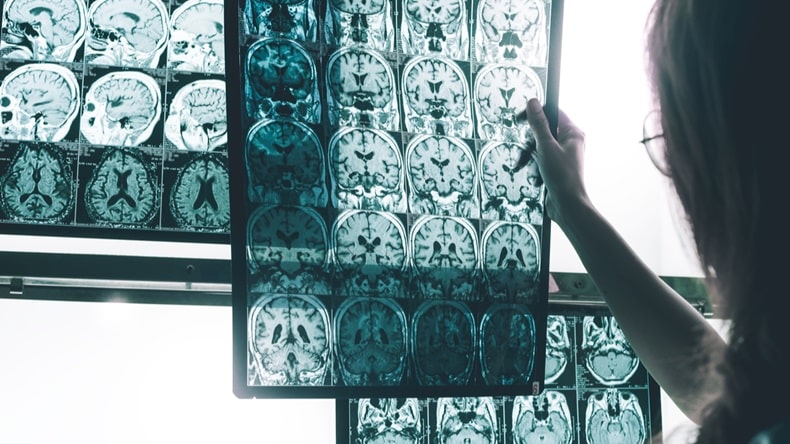
Alzheimer’s disease patients need more therapeutic interventions before they develop severe symptoms even though there are few pharmacological options at the very early stages of the disease, said experts discussing progress in the disease during a Demy-Colton ‘virtual salon’ session earlier this month.
The specialists discussed a range of topics on better and earlier treatment for Alzheimer’s on 8 July, including the societal impact of the disease in 2020, lessons learned from the many R&D failures and progress in the drug pipeline, and the use of artificial intelligence and machine learning to help identify patients at the start of the disease process.
Craig Ritchie, chief investigator of the European Prevention of Alzheimer’s Dementia (EPAD) Project, said that is was a fallacy that the disease affects just the elderly. “This whole concept of Alzheimer’s being a disease in older people is really being challenged right now,” he said. “Dementia is definitely a late-stage phenomenon of this disease, but the genesis of Alzheimer’s – and many neurodegenerative diseases – is at least in mid-life.”
Ritchie, who has been a senior investigator on more than 30 drug trials of both disease-modifying and symptomatic agents for Alzheimer’s disease, argued the case for more intervention for patients before severe symptoms manifest. This despite there being few pharmacological options in the very early stages of the disease.
“To wait for the drug is daft,” he said in the panel discussion entitled, ‘Alzheimer’s: Like a Tsunami, by the time you see it, it is too late’. There is a difference between intervention and pharmacological intervention, he elaborated, and doctors should be doing more with the tests and capabilities available today for patients with early signs of Alzheimer’s, rather than watching and waiting. “We talk about there being a long silent period of this disease before dementia develops, but it’s only silent because we are not listening properly,” Ritchie said.
Leading the discussion, Phyllis Barkman Ferrell, global head of external engagement for Alzheimer’s disease and neurodegeneration at Eli Lilly and Company, said that many doctors used time as a method of diagnosis for patients with suspected Alzheimer’s disease mainly because the pharmacological treatments available today only target more severe symptoms.
Barkman Ferrell said the disease was “creating a health and financial crisis for patients and families, and for nations around the world.” In the US alone, the direct costs per year of treating and caring for patients with Alzheimer’s is estimated at $300bn. On top of that, there is approximately $250bn extra in unpaid care, where health systems rely on family members to meet patients’ needs.
“Our health care system needs to progress as rapidly as possible, so that people who can benefit from next generation therapeutics” are able to do so, she said.
Fail And Then Fail Better
Howard Fillit, founding executive director and chief scientific officer of Alzheimer’s Drug Discovery Foundation, agreed. In terms as medical management, he noted, there was as much for Alzheimer’s patients as for other diseases – “except for that little white pill. And that little white pill is on the horizon.” (See table.)
Fillit, who has over 40 years’ experience in the research of Alzheimer’s and the care of patients with dementia, was involved in one of the first Alzheimer’s clinical trials in New York City in the 1980s, and acknowledged the biopharmaceutical industry’s efforts in seeking treatments for the disease: “We had failure, after failure, after failure, and with every failure we learnt something,” he said.
“Developing a drug to cure Alzheimer’s disease is incredibly hard,” Fillit said, noting that the majority of people in the biopharma industry spend their career working on a drug that will never come to market. Still, he said he had never been more excited about progress in Alzheimer’s research and drug development. “I really think that we are on the cusp of great progress … because we have learnt how to do clinical trials better, more rigorously, more efficiently and more effectively,” he said.
According to the Informa drug database, Biomedtracker, there are around 130 drugs in clinical development (Phase I to pre-registration) for the treatment of Alzheimer’s disease, and for the first time, fewer than half of the drug candidates in development are focused on beta-amyloid and tau protein approaches. Fillit said many of the clinical studies active in 2020 are “directed against novel targets related to aging, which is the primary risk factor for Alzheimer’s disease.” The Alzheimer’s Drug Discovery Foundation itself is supporting 25 trials, including one of the most advanced studies for a neuro-protection drug candidate.
Late-Stage Drug Development Pipeline For Alzheimer’s Disease (Phase III To Pre-Registration)
| Drug Name | Lead Company | AD Is Lead Indication | Development Phase | Molecule | Target |
|---|---|---|---|---|---|
| Aducanumab | Biogen | Y | BLA | Monoclonal Antibody | Amyloid Beta |
| Adlarity | Corium | Y | NDA | Small Molecule | Cholinesterases |
| AGB101 | AgeneBio | Y | III | Small Molecule | SV2A synaptic vesicle protein |
| ALZT-OP 1 | AZTherapies | Y | III | Small Molecule | Amyloid Beta |
| AVP-786 | Otsuka Holdings | N | III | Small Molecule | NMDA Glutamate Receptor |
| BAN2401 | Eisai | Y | III | Monoclonal Antibody | Amyloid Beta |
| Gantenerumab | Roche Holding | Y | III | Monoclonal Antibody | Amyloid Beta |
| LMTX | TauRx Therapeutics | N | III | Small Molecule | Tau proteins |
| Masitinib | AB Science | N | III | Small Molecule | Platelet-derived growth factor receptor |
| Rexulti | Otsuka Holdings | N | III | Small Molecule | Norepinephrine, Serotonin 5-HT2A receptor, Dopamine 2 (D2) Receptor |
| Solanezumab | Eli Lilly | N | III | Monoclonal Antibody | Amyloid Beta |
This variety of new approaches in clinical trials was also applauded by Barkman Ferrell. “I am really hopeful about emerging science,” she said. “It is not amyloid versus tau, or versus neuro-inflammation; we need to stop fighting with each other about mechanisms of action.” Alzheimer’s, as an incredibly complex disease, would need all of these options, she said. “There won’t just be one pill that cures this disease. There isn’t just one pill that cures any of the major diseases in our world.”
Fillit added, “We are going into a world of precision medicines, with combination therapy for Alzheimer’s disease.” With this, he said, there were business opportunities in “pulling together all the facets of the illness and having a comprehensive approach like we have in cancer, that is more clinically effective.”
Despite these scientific advances though, Ritchie again stressed the need to focus on the treatment of patients in doctors’ offices today. “The science over the last 10 years is unequivocal, but clinical practice is taking a long time to catch up,” he said. The focus today is on bridging “that gap with what we have in Alzheimer’s knowledge and what we can do in clinical practice.”
Earlier Diagnosis And A New Culture
There are many more tools available to diagnose and assess Alzheimer’s patients, but there are still barriers to using these technologies for patients presenting with mild symptoms at a younger age, Fillit noted. A full workup for a potential Alzheimer’s patients is a heavy burden on physician workflows. Fillit said he often heard the response, ‘Why should I bother making a diagnosis of Alzheimer’s disease when there is nothing that can be done?’
But, he said, there should be no “therapeutic nihilism” because “the drugs on the market do work and those correctly diagnosed early can go into clinical trials.”
Indeed, testing in the research setting is more advanced than that found in doctors’ offices, said Mylea Charvat, CEO and founder of Savonix, Inc., which has developed a platform for this purpose. Current testing was discovering the disease too late, she said, “If you fail the test you already have dementia.”
Charvat said newer tools were able to track multiple risk factors. “We need to do in Alzheimer’s what we do in heart disease,” she said. “We don’t wait until you have a heart attack and then give you a pill, we track your blood pressure, your cholesterol, your sedentary lifestyle…” Savonix’s mobile neurocognitive assessment and brain health platform uses digital mobile technology developed by a team data neuropsychologists, engineers and scientists.
As well as being able to use newer tools for diagnosing Alzheimer’s earlier, Ritchie said it was critical that when doctors do the tests, they could also store the data so that patient profiles can be created to help predict the course of disease in future patients.
Ritchie said there was a huge opportunity for the use of artificial intelligence and machine learning tools to gather data and make it useable in clinical practice. Ideally, those diagnostic algorithms would “not just be used in New York or London” but all over the world where they are needed.
As well as scientific advances and technological breakthroughs, Ritchie said there was more to be done in educating doctors and patients about brain health more broadly. “The dream I have is to change the conversation and change the culture to get rid of the ‘D’ word – dementia.” He added, that to “help people realize that what they do in mid-life will help their brain health in later life, then we have to get that culture change.”